Omron BP5250 Manual: A Comprehensive Guide
This guide details the Omron BP5250 Silver’s setup, usage, and troubleshooting, alongside Omron Connect app pairing and memory functions.
Learn about calibration, safety, and date/time settings for accurate blood pressure monitoring with this comprehensive resource.
The Omron BP5250 Silver Upper Arm Blood Pressure Monitor is a sophisticated device designed for convenient and accurate home blood pressure monitoring. This guide will provide a comprehensive understanding of its features and operation. It’s engineered to help individuals proactively manage their cardiovascular health by providing reliable readings.
Compatibility with the Omron Connect app allows for seamless data transfer and tracking, enabling users to share information with healthcare professionals. The BP5250 boasts user-friendly functionality, including a clear display of symbols and a robust memory function for storing readings. Understanding its capabilities is key to maximizing its benefits for personal wellness.
Unboxing and Component Overview
Upon opening your Omron BP5250 Silver package, you’ll find the blood pressure monitor unit itself, a cuff designed for upper arm measurement, and a user manual providing detailed instructions. Ensure all components are present and undamaged. The monitor features a digital display for reading results and buttons for operation.
The cuff is crucial for accurate readings and should be inspected for any tears or defects. Familiarize yourself with the cuff connector and its attachment point on the monitor. The included manual details each component and its function, preparing you for proper setup and use of your new blood pressure monitoring system.
Setting Up Your BP5250
To begin using your Omron BP5250, initial setup is required. First, download the compatible Omron app onto your smart device and create an account if you haven’t already. This allows for seamless data transfer. Next, insert the necessary batteries into the monitor’s battery compartment, ensuring correct polarity.
Following battery installation, you’ll need to attach the arm cuff to the monitor. The manual provides clear instructions on connecting the cuff securely. Proper cuff attachment is vital for accurate measurements, so follow the guide carefully before proceeding with your first reading.
Installing Batteries
The Omron BP5250 requires batteries to operate. Locate the battery compartment, typically on the underside or back of the monitor. Open the compartment cover, usually by sliding or lifting a latch. Insert the specified type and number of batteries – refer to the device’s specifications for details.
Ensure you align the positive (+) and negative (-) ends of the batteries with the markings inside the compartment. Incorrect battery installation will prevent the monitor from powering on. Once the batteries are securely in place, close the compartment cover until it clicks shut.
Attaching the Arm Cuff
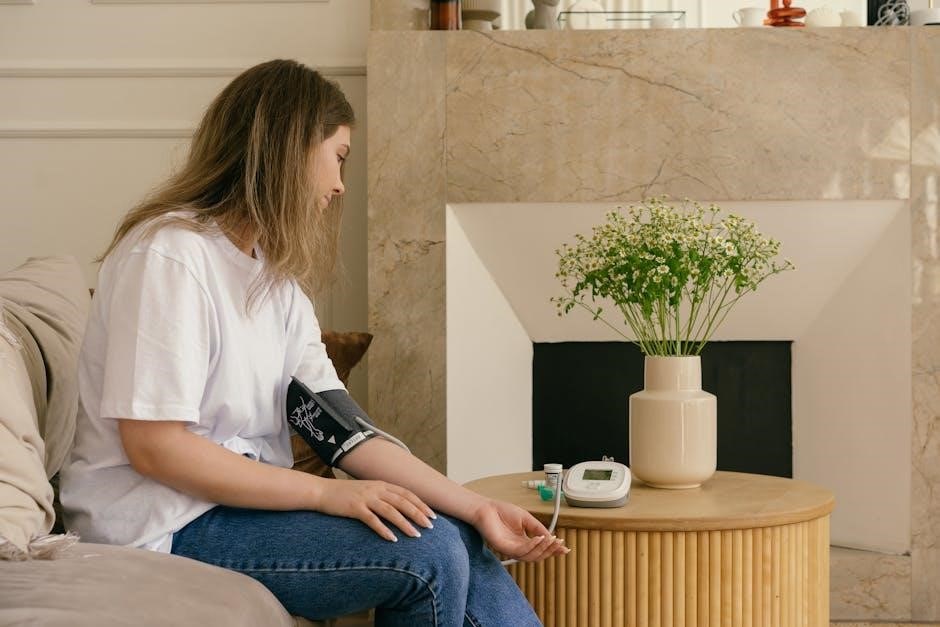
Proper cuff attachment is crucial for accurate readings with the Omron BP5250. Locate the cuff and ensure the artery mark (usually an arrow) on the cuff aligns with the brachial artery on your upper arm. The cuff should be snug, but not too tight, wrapping around your arm approximately one inch above the elbow.
Secure the cuff with the hook and loop fastener, ensuring it’s comfortable and doesn’t constrict circulation. Incorrect cuff placement can significantly affect blood pressure measurements, so follow these steps carefully.
Taking a Blood Pressure Measurement
Initiating a measurement with the Omron BP5250 is straightforward. After correctly attaching the arm cuff, remain still and seated with your back supported. Press the ‘Start’ button and allow the cuff to inflate automatically.
Avoid talking, crossing your legs, or making any movements during the inflation and deflation process. The monitor will display your systolic and diastolic blood pressure, along with your pulse rate. Ensure proper cuff placement and body posture for reliable results. Review the display symbols for understanding.
Proper Cuff Placement
Correct cuff placement is crucial for accurate readings with the Omron BP5250. Wrap the cuff snugly around your upper arm, ensuring the lower edge is approximately one inch (2-3 cm) above your elbow.
Position the artery mark on the cuff over your brachial artery, typically on the inner side of your arm. The cuff should fit comfortably, allowing space for one or two fingertips between the cuff and your arm. Ensure the cuff is at heart level during measurement for optimal results.
Correct Body Posture During Measurement
Maintaining proper posture is vital for reliable blood pressure readings with the Omron BP5250. Sit comfortably with your back supported and your feet flat on the floor.
Avoid crossing your legs, as this can elevate blood pressure. Relax your arm and keep it supported at heart level throughout the measurement process. It’s recommended to rest for five minutes before taking a reading to ensure a stable and accurate result. Minimize talking or movement during inflation and deflation.
Understanding the Display Symbols
The Omron BP5250 utilizes various display symbols to convey important information. Familiarize yourself with these indicators for accurate interpretation of your readings. Symbols represent systolic and diastolic pressure, pulse rate, and memory indicators.
Error symbols alert you to potential issues, such as movement during measurement or a low battery. The Bluetooth symbol indicates successful pairing with the Omron Connect app. Understanding these symbols ensures you can effectively monitor your blood pressure and address any concerns promptly, leading to better health management.
Using the Omron Connect App
The Omron Connect app seamlessly integrates with your BP5250, enabling convenient data tracking and analysis. Begin by downloading the compatible Omron app onto your smart device and creating an account. Follow the in-app pairing instructions to connect your monitor, ensuring Bluetooth is enabled and the device is within range (16 ft / 5m).
Once paired, readings will automatically transfer, allowing you to monitor trends over time. The app provides insightful graphs and reports, empowering you to proactively manage your cardiovascular health.
Pairing the BP5250 with Your Smart Device
To pair your Omron BP5250, first ensure the compatible Omron app is installed and you’ve created an account. Within the app, navigate to the device settings and select “Add New Monitor.” Follow the on-screen prompts; the app will search for available devices nearby.
Confirm the BP5250 appears in the list and select it. Ensure Bluetooth is enabled on your smart device and that the monitor is within 16 ft (5m). The app will guide you through the final steps to establish a secure connection for automatic data transfer.
Transferring Readings to the App
After successfully pairing your Omron BP5250, readings will automatically transfer to your smart device via Bluetooth following each measurement. Ensure your smart device remains within range (16 ft / 5m) during and immediately after taking a reading.
Open the Omron Connect app to view the transferred data, which will be organized chronologically. You can then analyze trends, share reports with your healthcare provider, and gain valuable insights into your blood pressure management. Manual transfer isn’t typically needed with a stable Bluetooth connection.

Memory Functionality
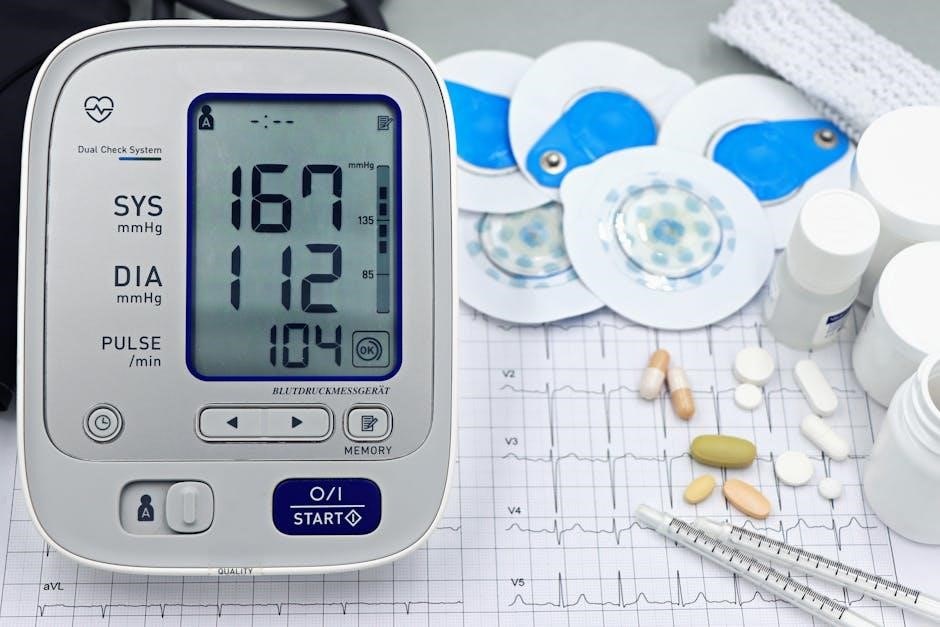
The Omron BP5250 stores readings in its internal memory, allowing you to track your blood pressure over time. This feature is invaluable for identifying trends and sharing data with your doctor. The device can store a significant number of readings, providing a comprehensive history.
You have the option to delete individual readings or clear the entire memory. Refer to the device’s menu options for instructions on deleting data. Regularly reviewing and managing your stored readings ensures accurate and relevant information for effective health monitoring.
Storing Readings in Memory
The Omron BP5250 automatically stores each blood pressure measurement in its memory after a successful reading. This allows for convenient tracking of your health data over time. The monitor is designed to retain a substantial number of readings, providing a detailed history for review.

Each stored reading typically includes the systolic and diastolic pressure, pulse rate, and date/time of the measurement. You can easily access these stored values through the device’s menu, enabling you to monitor trends and share information with healthcare professionals.
Deleting Readings from Memory
The Omron BP5250 allows you to delete individual readings or clear the entire memory, providing control over your stored data. To delete a single reading, navigate to the memory mode and select the reading you wish to remove, then follow the on-screen prompts.
For complete memory clearance, a specific procedure within the device’s settings must be followed. Caution: This action is irreversible, so ensure you’ve backed up any important data before proceeding. Regularly managing your memory ensures optimal device performance and data organization.
Calibration and Accuracy

Maintaining accuracy with the Omron BP5250 is crucial for reliable readings. Calibration differences can arise from improper cuff placement – ensure a snug fit at heart level – and user posture; remain still and rest for five minutes beforehand.
Regularly compare readings with a manually calibrated sphygmomanometer to verify consistency. Inspect the cuff for air leaks, as these can significantly impact results. If discrepancies persist, contact Omron support for professional inspection or recalibration to guarantee accurate blood pressure monitoring.
Potential Sources of Calibration Differences
Several factors can contribute to calibration discrepancies with the Omron BP5250. Incorrect cuff size or placement – not at heart level – is a common issue. User movement during measurement, or failing to rest for five minutes prior, also impacts accuracy.
Device sensitivity variations and even environmental factors can play a role. Regularly checking for cuff wear and tear, and ensuring proper arm positioning, are vital. These steps help minimize potential errors and maintain reliable blood pressure readings.
Comparing with a Manual Sphygmomanometer
To verify the Omron BP5250’s accuracy, compare its readings with a properly calibrated manual sphygmomanometer. Ensure both devices are used correctly – proper cuff size and placement are crucial. Take multiple readings with each device, at similar times, and under identical conditions.
Significant, consistent differences suggest a potential calibration issue with the BP5250. If discrepancies persist, contact Omron support for professional inspection or recalibration to ensure reliable blood pressure monitoring and accurate health insights.
Checking for Air Leaks in the Cuff
Regularly inspect the Omron BP5250’s cuff for any signs of damage, such as cracks or holes. To check for air leaks, inflate the cuff fully while it’s detached from the monitor. Listen carefully for hissing sounds, and feel around the cuff’s connections for escaping air.
Even small leaks can compromise measurement accuracy. If leaks are detected, replace the cuff immediately. Maintaining a properly sealed cuff is essential for reliable blood pressure readings and consistent monitoring of your cardiovascular health.
Troubleshooting Common Issues
Encountering problems with your Omron BP5250? Common issues include error messages, often indicating improper cuff application or movement during measurement. If the device fails to power on, ensure batteries are correctly installed or try a different power source.
Discrepancies between readings and manual measurements may suggest calibration issues or incorrect technique. Consult the manual for specific error code meanings and solutions. For persistent problems, contact Omron support for assistance and potential device inspection.
Error Messages and Their Meanings
The Omron BP5250 displays error messages to indicate potential issues during measurement. An “Err” message often signifies improper cuff placement, excessive movement, or a loose connection. Other codes may relate to low battery power or internal device malfunctions.
Consult the user manual for a complete list of error codes and their corresponding meanings. Addressing the indicated issue – such as re-applying the cuff correctly – usually resolves the error. If errors persist, contact Omron support for further assistance and potential troubleshooting steps.
Device Not Powering On
If your Omron BP5250 fails to power on, first verify the batteries are correctly installed with the proper polarity. Ensure the batteries are fresh and haven’t expired, as low battery power is a common cause. Inspect the battery compartment for any corrosion or obstructions preventing a solid connection.
Try replacing the batteries with a new set. If the device still doesn’t power on, contact Omron customer support for assistance, as it may indicate an internal device issue requiring professional attention or repair.
Maintenance and Care
To ensure the longevity and accuracy of your Omron BP5250, regular maintenance is crucial. Gently clean the arm cuff with a damp cloth, avoiding harsh detergents or abrasive cleaners. The monitor’s casing can be wiped down similarly.
Regularly inspect the cuff for cracks or leaks, as these can affect readings. Store the monitor in a cool, dry place, away from direct sunlight and extreme temperatures. Avoid storing it with heavy objects that could damage the device. Proper care maintains reliable performance.
Cleaning the Cuff and Monitor
Maintaining cleanliness is vital for accurate readings and device longevity. To clean the cuff, gently dampen a soft cloth with water and mild detergent. Avoid harsh chemicals or abrasive cleaners, as they can damage the material. Wipe the cuff thoroughly and allow it to air dry completely before reattaching.
For the monitor itself, use a similar damp cloth to wipe down the casing. Ensure no liquid enters the device. Regular cleaning prevents the buildup of dirt and grime, ensuring optimal performance and hygiene.

Storage Guidelines
Proper storage extends the lifespan of your Omron BP5250. When not in use, store the monitor in a cool, dry place, away from direct sunlight and extreme temperatures. Avoid storing it in humid environments, as moisture can damage the internal components.

Keep the cuff loosely coiled and avoid bending it sharply. Do not store the device with batteries installed for extended periods, as leakage could occur; A protective case or bag is recommended to shield the monitor from dust and physical damage during storage.

Safety Precautions
Prioritize safety when using the Omron BP5250. This device is not intended for use on children or individuals with certain medical conditions without consulting a healthcare professional. Contraindications include use on limbs with AV shunts or injuries.
Always follow the instructions carefully and avoid self-treatment based solely on readings. Warnings include not applying the cuff over clothing and ensuring the device isn’t used during physical activity. Cautions advise against disassembling the monitor or modifying it in any way.
Contraindications for Use
The Omron BP5250 is not suitable for all individuals. Do not use this device on patients undergoing intra-arterial therapy, or those with acute vascular issues affecting the arm. Avoid use on limbs with an AV shunt, as it may lead to inaccurate readings or complications.
Individuals with significant arm injuries or undergoing dialysis should consult their physician before use. This monitor is not a substitute for professional medical advice, and self-diagnosis or treatment based on readings is discouraged. Always seek guidance from a qualified healthcare provider.
Warnings and Cautions
Always consult a healthcare professional for diagnosis and treatment of hypertension. Do not rely solely on the Omron BP5250 for medical decisions. Avoid taking measurements under extreme conditions – excessive cold or heat can affect accuracy.
Ensure the cuff is appropriately sized for your arm; an incorrect size will yield inaccurate results. Do not modify the device without authorization, as this may void the warranty and compromise safety. Keep the device dry and away from direct sunlight.
Setting the Date and Time
Accurate date and time settings are crucial for correct timestamping of blood pressure readings in the Omron BP5250’s memory. To set, press and hold the ‘Memory’ button until the year digits flash. Use the ‘Start’ button to adjust the year, then press ‘Memory’ again to cycle through month, day, hour, and minute settings.
Confirm each setting by pressing ‘Memory’ again. The device will automatically save the changes. Proper date and time ensure accurate tracking of your blood pressure trends over time, facilitating better health management and reporting to your physician.
Technical Specifications
The Omron BP5250 Silver utilizes an oscillometric method for blood pressure measurement, with a pressure range of 0 to 300 mmHg. It boasts a measurement accuracy of ±3 mmHg for blood pressure and ±5% for pulse rate. The device operates on 2 AA batteries, and its cuff circumference accommodates arms from 9 to 17 inches (23 to 43 cm).
Memory capacity allows storing up to 100 readings, and it features a display utilizing an LCD screen. The BP5250’s dimensions are approximately 6.3 x 4.1 x 2.8 inches, and it weighs around 10.4 ounces without batteries.